Article: Buying Stab Proof Gear for Teens: A Parent's Guide
Buying Stab Proof Gear for Teens: A Parent's Guide
Table of Contents
- What Parents Need to Know Before Buying Stab Proof Gear for Teens
- Sizing for Teenage Bodies
- Stab-Resistant Clothing Limitations: What It Cannot Do
- Stab-Resistant Clothing for Everyday Wear: Overt Versus Covert
- School Policies, Safeguarding and the Law on Stab Proof Gear
- Lowering Risk Beyond the Garment: What Actually Reduces Harm
- Conclusion: Choosing Protection Your Teen Will Actually Wear
- Frequently Asked Questions
Last Updated: October 13, 2026
What Parents Need to Know Before Buying Stab Proof Gear for Teens
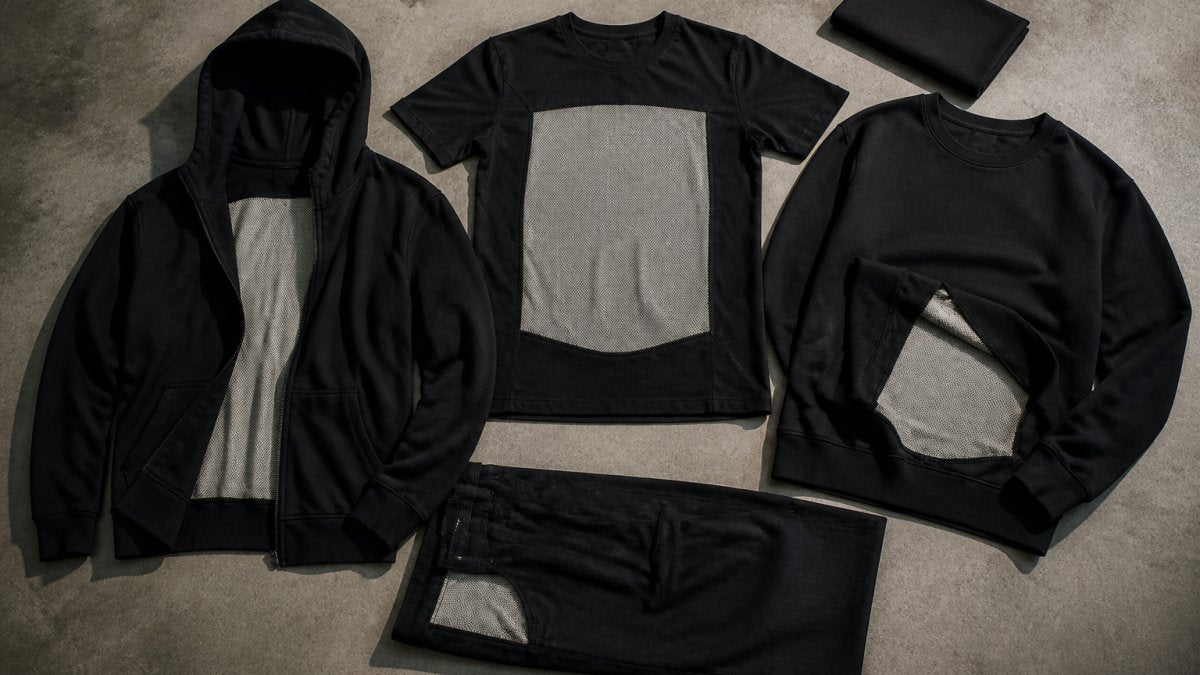
Buying stab proof gear for teens is a decision most parents hope they never have to research, yet rising anxiety about late-night commutes, weekend shifts and unfamiliar routes has pushed demand for discreet protective clothing among younger wearers. At P.Y Clothing, we build stab-resistant garments from ultra-high-molecular-weight polyethylene (UHMWPE), and the questions we field most often come from parents.
Stab-resistant clothing is protective clothing engineered to resist penetration from a knife or sharp point, rated by how much energy it absorbs under controlled test conditions. It reduces injury risk but makes no one invincible.
Three things matter more than the label:
- The protection level and whether it is independently certified
- The fit, because armour that shifts leaves gaps
- Whether your teen will actually wear it every day
How Test Conditions Differ From a Real Attack
A test blade strikes a fixed sample at a controlled angle, in a laboratory, once. A real attack is chaotic: repeated strikes, unpredictable angles, movement, and a panicking wearer. A certified garment raises the energy needed to penetrate, buying time and reducing injury severity, but cannot account for every variable. Treat certification as a floor, not a ceiling.
Sizing for Teenage Bodies
Sizing is where most purchases go wrong. An item only performs as tested when the item sits flat against the torso, covering the vital organs, without riding up when the wearer raises their arms.
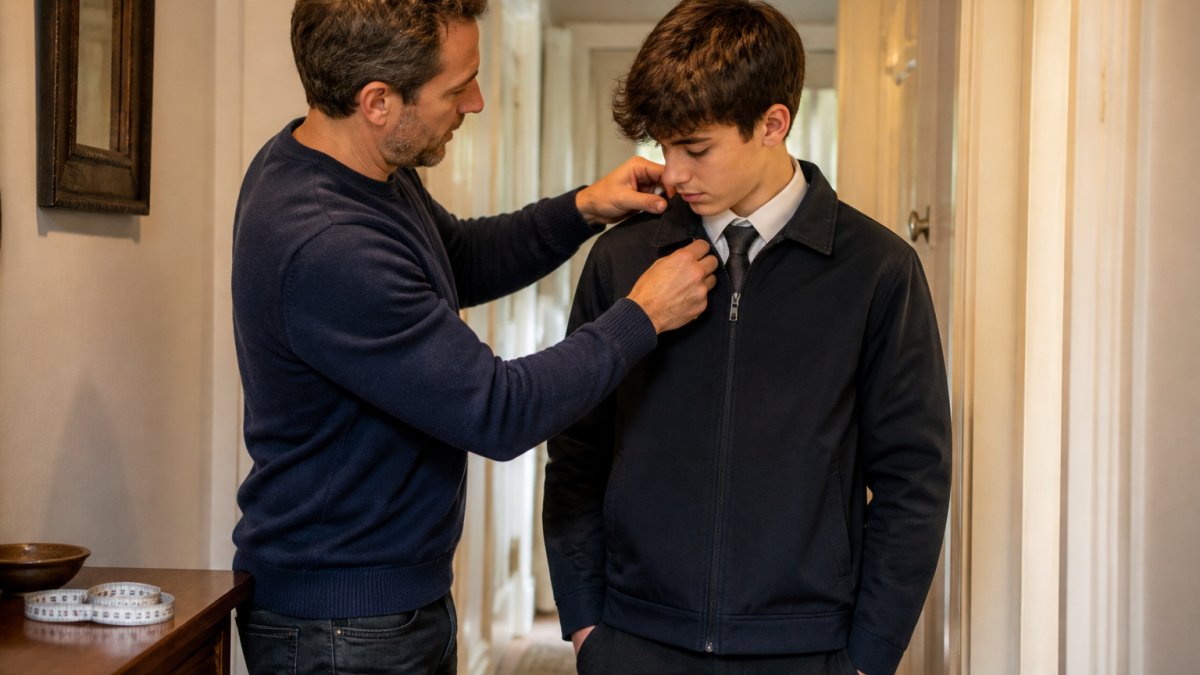
Measure the chest at its fullest point and the waist, then check both against the size chart rather than picking a size "to grow into".
Growth, Layering and Comfort Checks
Teen sizing is not just smaller adult sizing. Three factors matter:
- Growth: a garment that fits in September may not fit in March. Re-check each term.
- Layering: test the fit with the actual layers they will wear.
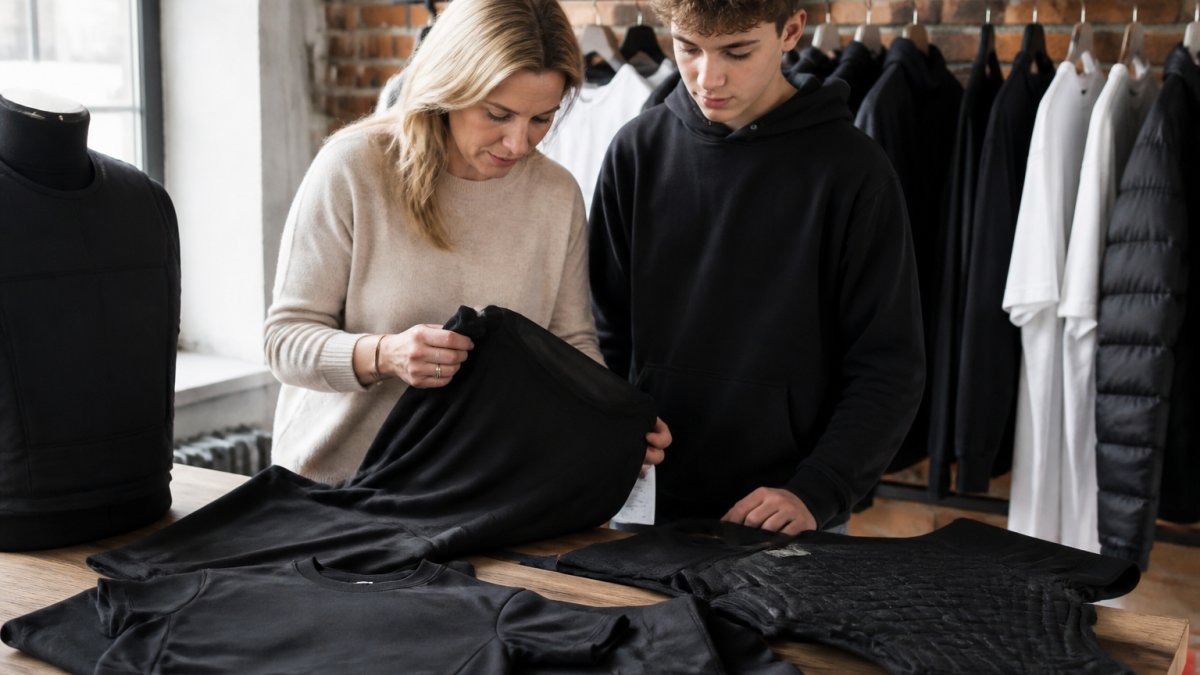
- Heat and mobility: a heavier item is warmer and stiffer. For a teen walking, cycling or taking public transport, a lighter covert item is usually more wearable, even at a lower rating. The best garment is the one that stays on.
Before keeping any garment, run these checks:
- Raise both arms overhead: the hem should not lift past the navel
- Twist at the waist: the panel should stay centred
- Check the actual jacket or hoodie is one that they will use
If it fails any check, size up or down before the returns window closes.
A Parent-and-Teen Fit Conversation
Fit is also a decision point. Before buying, ask three questions:
- Is this appropriate for them right now? A parent or guardian should be involved, and the teen should understand what the garment can and cannot do.
- Will they actually wear it? If not, the money is better spent on route planning and support.
- What does the school say? A garment banned on site will only ever be worn on the walk to and from school, which changes what you should buy.
Often the request is driven by fear about a specific route or person. That is a conversation worth having with the school and, where appropriate, the police, before any purchase.
Verifying the Product Before You Trust the Fit
A good fit on a garment with no verifiable certification is still a bad purchase. Before you commit, check:
- Test documentation: ask the seller for the certification or test report that supports the rating. A vague "stab-proof" claim is not a rating.
- Rating scope: confirm which threats the rating covers (for example, a single-edged knife versus a spike) and which it does not.
- Returns and warranty: check the returns window and whether the warranty covers panel degradation.
If a seller cannot produce the test documentation or explain the rating in plain terms, walk away.
Stab-Resistant Clothing Limitations: What It Cannot Do
Stab-resistant clothing cannot stop every weapon, cannot cover the whole body, and cannot replace avoiding dangerous situations.
A certified panel protects only the area it covers. Arms, neck, legs and face are usually exposed, so a slash to the forearm or a strike to the head is unaffected by a torso panel.
Protective panels also degrade with repeated flexing, heat exposure and washing if the care label is ignored. A common mistake is machine-washing a protective layer because the outer garment looks like ordinary clothing.
Stab-Resistant Clothing for Everyday Wear: Overt Versus Covert
Everyday protective clothing splits into two styles, and the choice usually comes down to whether the wearer wants anyone to know.
Overt vests are worn on the outside, often over a uniform or shirt.
Covert garments sit under clothing, shaped like a vest, T-shirt or hoodie.
P.Y Clothing designs covert streetwear for exactly this reason: the protection is invisible, so the wearer's style stays intact and the garment gets worn.
School Policies, Safeguarding and the Law on Stab Proof Gear
There is no law banning the ownership of stab-resistant clothing in the UK, but schools can and do restrict it under their own uniform and safeguarding policies.
That gap catches parents out. The Department for Education guidance on school behaviour and safeguarding sets the framework schools work within, and the Home Office body armour standards guidance is the reference point for what a rating actually means.
What Safeguarding Actually Looks Like in Practice
Safeguarding is a process, not a single rule. If a school learns a pupil is wearing body armour, the usual pattern is:
- A conversation with the pupil and parents. The school will want to understand why the garment is being worn, not just that it is.
- A risk assessment. Staff will consider whether there is a genuine concern about a route, a person, or an incident, and whether other pupils are affected.
- A decision on site rules. The school may prohibit the garment, allow it under specific conditions, or refer the matter onward.
- Referral where appropriate. If there is a credible threat, the school may involve the police.
For a parent, the practical steps are straightforward:
- Check the school's uniform and behaviour policy before buying anything.
- Speak to the pastoral or safeguarding lead, not just the form tutor, and be honest about the reason for the request.
- Ask what the school would do if the garment were worn on site, and whether there is a documented concern about a route home.
Some schools refuse outright; others will discuss it if there is a genuine, documented concern. Either way, have the conversation before you spend money.
Age-Appropriate Decision-Making for Teenagers
Protective clothing is an adult purchase with adult implications, and a teenager should not make that decision alone.
- Involve a parent or guardian. The purchase, fit checks and school conversation should all include an adult who understands the risks.
- Assess whether gear is appropriate at all. For many teenagers, the real need is a safer route, a trusted adult, or a reporting process, not a vest.
- Be realistic about what a garment does. It reduces injury risk in the area it covers but does not stop every weapon, cover the whole body, or remove the threat.
Risk Reduction Beyond the Garment
Gear is one layer. The layers around it usually matter more, and they cost nothing:
- Route planning: well-lit, busy streets beat shortcuts every time
- Timing: travelling in groups, or with a friend, reduces isolation
- Phone habits: earbuds out, phone away, head up
If your teen is anxious about a specific route or person, that is a conversation worth having with the school and, where appropriate, the police. A garment addresses a physical risk, not fear, and fear is often what drives the request.
Verifying Claims Before You Buy
A "stab-proof" label is marketing, not a rating. Before buying, check:
- Test documentation: ask for the certification or test report behind the rating.
- Rating scope: confirm which threats are covered and which are not.
- Returns and warranty: check the returns window and whether the warranty covers panel degradation.
If a seller cannot produce the test documentation or explain the rating in plain terms, treat that as a reason to walk away.
Lowering Risk Beyond the Garment: What Actually Reduces Harm
Gear is one layer. The layers around it usually matter more, and they cost nothing.
- Route planning: well-lit, busy streets beat shortcuts every time
- Timing: travelling in groups, or with a friend, reduces isolation
- Phone habits: earbuds out, phone away, head up
If your teen is anxious about a specific route or a specific person, that is a conversation worth having with the school and, where appropriate, the police. A garment addresses a physical risk. It does not address fear, and fear is often what is actually driving the request.
Conclusion: Choosing Protection Your Teen Will Actually Wear
The hardest part of buying stab proof gear for teens is not the certification code. It is finding something your teenager will put on every day without resenting it.
At P.Y Clothing, we build covert, stab-resistant streetwear from UHMWPE with the fit, weight and everyday look that make daily wear realistic. Browse the range, check the sizing guide against your teen's measurements, and speak to their school first.
Frequently Asked Questions
P.Y stab resistant clothing v Traditional stab vest?
Unlike a traditional stab-proof vest, P.Y Clothing is designed to fit seamlessly into everyday life. Our discreet stab-resistant clothing offers an added layer of protection without the bulk, weight, or appearance of body armour, making it more comfortable for teens to wear to school, on public transport, or while out with friends. The goal isn't to replace awareness or good judgement—it's to provide practical, everyday protection that looks and feels like normal clothing, helping young people feel more confident without standing out.
Can a teenager wear stab-resistant clothing under a school uniform?
Physically, a thin covert vest can sit under a shirt, but that does not make it allowed. Schools set their own uniform and safeguarding rules, and many treat concealed protective wear as something staff need to know about. Speak to the school before buying. If a teen is genuinely at risk on the journey to and from school, staff can usually agree a discreet arrangement, and that conversation is better had before the garment turns up in a changing room.
What offers better everyday protection?
Traditional stab-proof vests are designed to protect the chest and back, often leaving vulnerable areas such as the neck, shoulders, and underarms exposed. The P.Y 001 has been engineered with extended stab-resistant coverage, featuring a high zip-up collar to help protect the neck and upper chest, while the stab-resistant material extends into the underarm area for increased coverage where conventional vests often provide little or no protection. Combined with the look and comfort of everyday clothing, the P.Y 001 offers discreet protection without compromising mobility or style.
How should a P.Y item fit a teenager who is still growing?
Choosing the correct size is important to ensure your P.Y 001 is both comfortable and effective. Please refer to the Sizing Chart on our website before ordering and take accurate body measurements, particularly your chest, waist, height, and arm length. Measure with a soft tape while wearing light clothing for the most accurate fit. The P.Y 001 is true to size, so we generally recommend ordering your teen's normal clothing size. The garment should fit close to the body while allowing enough room for comfortable movement without feeling restrictive. If your teen regularly wears a school jumper, hoodie, or other thick layers underneath, we recommend taking those garments into consideration when selecting a size. If they're between sizes or plan to wear heavier clothing underneath most of the time, sizing up may provide a more comfortable fit without compromising everyday mobility.